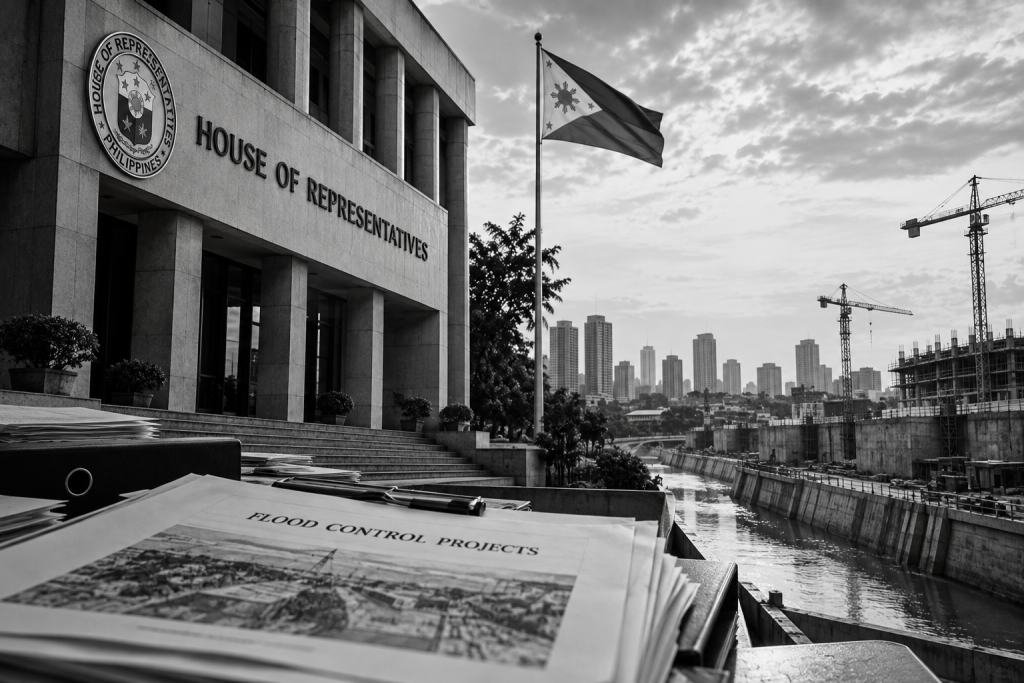
Philippines Asset Recovery: Why Frozen Assets Are Not Yet Recovered Assets
Philippines asset recovery efforts connected to the country’s flood-control investigations illustrate an important distinction that can easily disappear behind large headline numbers:
Frozen assets are not the same as recovered assets.
On 24 September 2026, The Philippine Star reported that the Anti-Money Laundering Council (AMLC) had preserved approximately ₱24.7 billion in assets linked to investigations associated with alleged irregularities in flood-control projects.
The figure emerged during House of Representatives budget deliberations concerning the AMLC. Importantly, the ₱24.7 billion total was stated to be as of January 2026, rather than representing a new ₱24.7 billion freeze imposed in September.
The same reporting also referred separately to freeze orders, civil-forfeiture petitions, forfeiture orders and money ultimately returned to victims or government institutions.
Those categories should not be combined.
They represent different stages in the asset-recovery process.
That distinction is particularly important for lawyers, investigators and companies involved in financial disputes.
Locating an asset is one stage.
Freezing it is another.
Forfeiting it requires further legal process.
And actually converting the asset into money that can be returned or applied toward a judgment is another challenge entirely.
What Does the ₱24.7 Billion Figure Actually Mean?
According to the September House budget discussion reported by The Philippine Star, the AMLC described approximately ₱24.7 billion in assets as having been preserved as of January 2026.
The reporting stated that, among Court of Appeals freeze orders discussed during the hearing, 14 flood-control-related cases covered approximately ₱20.2 billion in preserved assets. It also separately referred to civil-forfeiture petitions involving corruption cases and additional flood-control-related petitions before the courts.
These figures should not simply be added together.
The same property may appear at different procedural stages.
A bank account could first be frozen and later become subject to a civil-forfeiture petition.
Counting each stage as a separate recovered amount would therefore risk overstating the result.
For asset-recovery work, the critical question is always:
What legal status does the asset have today?
Philippines Asset Recovery Begins With Identification
Before an asset can be frozen, investigators generally need to identify it.
That sounds straightforward.
In practice, it can be the most difficult part of the process.
A subject may hold value through:
- Bank accounts
- Land
- Condominiums
- Vehicles
- Companies
- Insurance products
- Securities
- Offshore entities
- Family members
- Nominee shareholders
- Related businesses
A conventional search based only on the subject’s name may therefore identify only part of the financial picture.
An effective asset discovery investigation may need to combine corporate records, property information, litigation, financial intelligence, beneficial-ownership research and local enquiries.
Compliancia’s asset investigation work includes searches involving property, company ownership and international assets, as well as assessments of whether identified assets appear realistically recoverable.
Stage 1: Identify the Asset
The first objective is to determine:
What does the subject own or control?
Investigators may search for registered property, corporate interests and other identifiable assets.
However, registered ownership is not always the end of the enquiry.
A person may exercise control over an asset without appearing as its legal owner.
That leads to the next question.
Stage 2: Establish Beneficial Ownership
Beneficial ownership is particularly important in corruption, fraud and asset-recovery investigations.
The legal owner of a company or property may be different from the person who ultimately controls or benefits from it.
Investigators may therefore examine:
- Shareholders
- Directors
- Nominees
- Related companies
- Family relationships
- Historical ownership changes
- Payments between connected entities
- Common addresses
- Business interests
- Corporate control
Philippine anti-money-laundering rules specifically require access to information concerning the beneficial ownership and control of relevant legal arrangements.
This is why Compliancia’s professional investigation services include UBO and nominee detection, land and property ownership research, asset-recoverability assessments and corporate investigations.
Stage 3: Freeze or Preserve the Asset
Once an asset has been identified and sufficient legal grounds exist, authorities may seek to prevent it from being moved or dissipated.
Under the Philippine Anti-Money Laundering Act, the Court of Appeals may issue a freeze order where probable cause exists that property is related to unlawful activity. Philippine law also provides for subsequent asset-preservation measures in appropriate money-laundering or civil-forfeiture proceedings. (Republic Act No. 9160)
AMLC rules explain that implementation of a freeze order generally prevents transactions, withdrawals, transfers, conversion or concealment involving the affected property.
That is why a freeze is valuable.
It preserves the asset while investigators and courts continue examining the case.
But it does not automatically transfer ownership of that asset to the government or a victim.
Freeze Does Not Mean Forfeiture
This is the central distinction.
A freeze is essentially protective.
Its purpose is to prevent an asset from disappearing while the legal process continues.
Forfeiture is different.
Under Philippine anti-money-laundering law, civil-forfeiture proceedings can be used to seek a court order affecting property connected to unlawful activity. The law also provides mechanisms for people asserting legitimate interests in forfeited property to make claims.
That process matters because ownership can be complicated.
A property may have:
- Joint owners
- Banks holding security
- Innocent third-party interests
- Corporate shareholders
- Family claims
- Existing creditors
Those competing interests may need to be resolved before value can ultimately be recovered.
Forfeiture Still Does Not Necessarily Mean Cash Recovery
Even after a forfeiture order, another challenge remains.
The asset has to be realised.
If the asset is cash in a bank account, that process may be relatively direct.
Other assets are more complicated.
Consider:
- Land
- Houses
- Vehicles
- Company shares
- Luxury goods
- Business interests
These assets may need to be valued and sold.
Some may be subject to mortgages or liens.
Others may be difficult to market.
Company shares may appear valuable while producing little practical recovery if the company itself is insolvent or privately held.
This creates what Compliancia refers to in asset investigations as an important practical distinction:
Asset value on paper is not necessarily recoverable value.
The Asset-Recovery Chain
A useful way to understand Philippines asset recovery is as a sequence:
Identify → Trace → Preserve → Prove → Forfeit → Realise → Return
Each stage answers a different question.
Identify
What asset exists?
Trace
Where did the money or property come from, and where did it go?
Preserve
Can the asset be prevented from disappearing?
Prove
Can investigators establish the necessary connection between the asset and the alleged unlawful conduct?
Forfeit
Has a court determined that the asset can legally be forfeited?
Realise
Can the asset be converted into usable value?
Return
Can the proceeds ultimately be transferred to the state, victims or another legally entitled party?
This is why saying “₱24.7 billion has been recovered” would materially overstate what the September reporting established.
The more accurate description is that approximately ₱24.7 billion in assets had reportedly been preserved as of January 2026 in connection with the wider investigations.
What Has Actually Been Forfeited or Returned?
The same House budget discussion demonstrates how different the numbers become once later stages are considered.
The Philippine Star reported that courts had issued 106 forfeiture orders during 2026 covering approximately ₱2.17 billion in assets across the cases discussed.
Separately, approximately:
- ₱774 million had reportedly been returned to victims of various crimes;
- ₱166 million had been turned over to the national government; and
- ₱119 million had been transferred to the Office of the Ombudsman.
These figures were presented in the broader AMLC budget discussion and should not be interpreted as amounts recovered solely from the flood-control investigation.
That difference matters enormously.
Preserved value, forfeited value and returned value are different metrics.
Why Corporate-Link Analysis Matters
Large infrastructure investigations can involve networks of companies rather than a single entity.
An investigator may need to establish whether apparently separate businesses share:
- Directors
- Shareholders
- Beneficial owners
- Registered addresses
- Employees
- Contractors
- Bank relationships
- Family relationships
- Common intermediaries
The AMLC itself has publicly described one 2026 freeze-order matter involving a lawmaker, a construction company and associated individuals, with the Court of Appeals finding probable cause for the freeze under the applicable legal standard. The identities and wider allegations in individual matters should be assessed based on the relevant court records and proceedings rather than assumed from the existence of a freeze order.
For investigators, the broader lesson is straightforward:
Follow control, not simply registered ownership.
Compliancia’s corporate investigation services include mapping undisclosed corporate structures, UBO and nominee detection, asset-recoverability analysis and foreign asset searches.
Following the Money Across Borders
Another challenge arises when assets leave the jurisdiction.
Funds may move through:
- Foreign bank accounts
- Offshore companies
- International property
- Securities
- Trade transactions
- Connected businesses
Philippine anti-money-laundering law expressly provides mechanisms for international cooperation in money-laundering investigations and proceedings.
Cross-border recovery nevertheless tends to be more complicated than domestic tracing.
Different jurisdictions may require different evidence.
Ownership structures can differ.
Local court orders may need recognition elsewhere.
That is why international asset investigations frequently require both documentary research and reliable local enquiries.
Compliancia maintains investigative capabilities across Southeast Asia and supports lawyers and companies with asset tracing and international asset searches.
Why Speed Matters in Asset Tracing
Assets can change quickly once a dispute or investigation becomes known.
Money can move.
Companies can transfer shares.
Properties can be mortgaged.
Vehicles can be sold.
Corporate structures can be changed.
The international Stolen Asset Recovery Initiative’s Asset Recovery Handbook similarly distinguishes provisional restraint or freezing measures from final confiscation and emphasises their role in preventing assets from being dissipated while proceedings continue.
This is why asset investigations often need to begin before the underlying legal case reaches its final stage.
By the time judgment is obtained, the most accessible assets may already have disappeared.
What Legal Teams Should Ask Before Pursuing Recovery
Before committing substantial resources to recovery proceedings, counsel may benefit from answering several investigative questions:
What assets can actually be identified?
Who legally owns them?
Who beneficially controls them?
Are they already encumbered?
Have assets recently been transferred?
Are nominee arrangements involved?
Are assets located in another jurisdiction?
What evidence links the asset to the relevant individual or entity?
Can the asset realistically be sold or enforced against?
What is its likely net recoverable value?
A successful asset investigation should help turn a headline number into a realistic recovery strategy.
Supporting Asset Recovery and Litigation Across Southeast Asia
Compliancia supports companies, law firms and their counsel with investigations and asset intelligence across Southeast Asia.
Relevant services include:
- Asset discovery and tracing
- Beneficial-ownership research
- UBO and nominee detection
- Corporate-link analysis
- Property investigations
- International asset enquiries
- Fraud and corruption investigations
- Source enquiries
- Company due diligence
- Litigation support
- On-the-ground verification
Our objective is not simply to identify assets.
It is to help answer the questions that determine whether recovery is commercially and legally realistic:
What exists?
Who owns it?
Who controls it?
Where is it located?
What claims already exist against it?
And what evidence connects the asset to the target?
In asset recovery, identifying the money is only the first step.
The real challenge is creating a defensible path from discovery to preservation, from preservation to forfeiture, and ultimately from forfeiture to recoverable value.
Editorial Note
This article discusses publicly reported asset-preservation measures connected with ongoing investigations in the Philippines.
The approximately ₱24.7 billion figure cited in September 2026 reporting referred to assets described as preserved as of January 2026. It should not be interpreted as ₱24.7 billion newly frozen in September or as ₱24.7 billion already recovered by the government or victims.
Freeze orders, civil-forfeiture petitions, forfeiture orders and amounts ultimately returned are legally and procedurally distinct and should not be aggregated without confirming whether the same assets appear at multiple stages.
Underlying allegations connected with flood-control projects remain subject to investigation and legal proceedings. A freeze or preservation order does not by itself establish guilt, final ownership or criminal liability.
Primary reporting: The Philippine Star — AMLC freezes P24.7 billion assets in flood mess
Additional legal and institutional references: Anti-Money Laundering Council and Republic Act No. 9160 — Anti-Money Laundering Act.